Dissecting Structural Variations in Activation Strings That Link Zero-Deposit Entries to Incremental Funding Tiers Across Digital European Platforms
Drew Becker · Aug 21, 2026
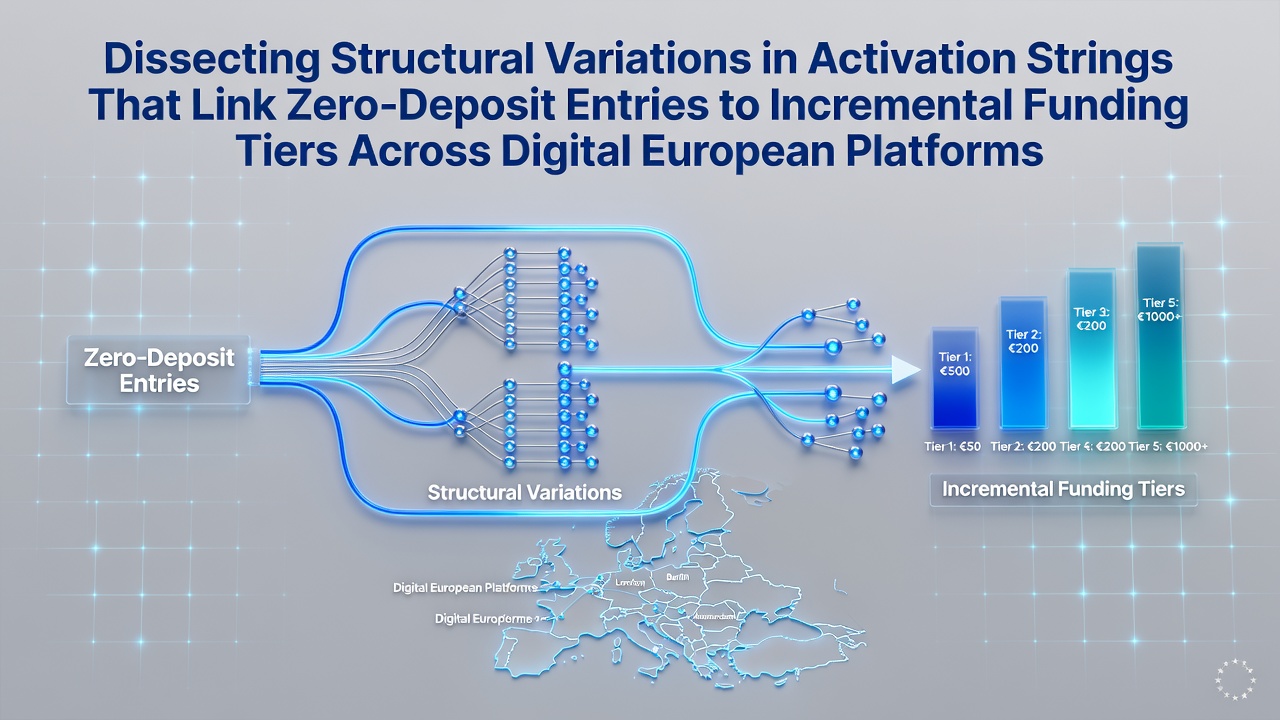
Dissecting Structural Variations in Activation Strings That Link Zero-Deposit Entries to Incremental Funding Tiers Across Digital European Platforms
European digital platforms employ activation strings as structured identifiers that connect complimentary access points with scaled deposit requirements, and these strings exhibit measurable variations in length, prefix patterns, and alphanumeric sequencing across different jurisdictions. Operators in Germany, Malta, and Sweden apply distinct formatting rules that determine how a zero-deposit entry transitions into incremental funding stages ranging from 10 euros to 1000 euros, while data collected through platform audits in August 2026 reveal consistent structural differences tied to local licensing frameworks.
Core Components of Activation String Architecture
Activation strings typically combine alphabetic prefixes with numeric suffixes and special characters that signal eligibility tiers, whereas researchers tracking patterns across multiple sites note that strings for no-deposit entry often begin with codes such as ND- or FREE- followed by eight to twelve characters that unlock initial access before any funding occurs. These same strings frequently embed secondary markers that activate once a user completes a first deposit, and the transition mechanics rely on backend validation systems that read the embedded identifiers to unlock reward multipliers at each funding threshold.
Platforms licensed under teh Malta Gaming Authority integrate strings that reference both entry-level and progressive tiers within a single sequence, yet German operators regulated by the GGL tend toward segmented codes where the initial no-deposit portion remains separate from deposit-linked extensions. This segmentation allows clearer audit trails when tracking how a player moves from zero-deposit activation to deposits at 50 euros, 200 euros, or higher levels.
Regional Differences in String Formatting
Swedish platforms licensed through Spelinspektionen frequently utilize 16-character strings that incorporate checksum digits for verification, and these formats differ from those observed in southern European markets where shorter 10-character codes predominate. Observers note that the longer Swedish variants reduce collision risks when multiple promotions run simultaneously, while shorter formats common in Mediterranean jurisdictions prioritize faster manual entry on mobile interfaces.

August 2026 regulatory updates from several EU member states required operators to standardize certain checksum positions within activation strings, and compliance reports indicate that platforms adjusted prefix sequences accordingly without altering the core linkage between zero-deposit entries and subsequent funding tiers. These adjustments maintain compatibility with existing player accounts while introducing new validation layers that verify string authenticity before any tier progression occurs.
Transition Mechanisms from Zero-Deposit to Funded Tiers
The linkage process begins when an activation string validates a no-deposit entry, after which the same string or an appended segment triggers eligibility for deposit-based incentives once funding thresholds are met. Data from industry tracking services show that strings containing embedded tier flags activate reward ladders automatically, whereas strings lacking such flags require secondary codes to advance from the initial entry point to the 100 euro or 500 euro deposit levels.
One documented pattern involves hybrid strings that remain dormant after the zero-deposit phase until a player initiates a deposit of at least 20 euros, at which point the remaining characters unlock higher multipliers. Platforms in the Netherlands and Belgium have adopted this model under their respective national regulators, and the approach reduces administrative overhead by eliminating the need for entirely separate code sets at each funding stage.
Technical Validation and Security Considerations
European operators implement real-time validation APIs that parse activation strings against centralized databases, and these systems cross-reference the string against player IP, device fingerprint, and account history to prevent reuse across multiple zero-deposit entries. Security protocols updated in mid-2026 require additional hashing layers on the numeric suffix portions, which has led some platforms to revise their string generation algorithms while preserving the functional connection to incremental deposit rewards.
According to reports published by the European Gaming and Betting Association, standardized validation procedures now cover more than 80 percent of licensed platforms operating across EU borders, and these procedures directly influence how activation strings route users through successive funding tiers without creating duplicate entries or reward conflicts.
Conclusion
Structural variations in activation strings across European digital platforms reflect both regulatory requirements and operational preferences, yet the fundamental linkage between zero-deposit entries and incremental funding tiers remains consistent in design. Continued monitoring of formatting changes and validation protocols will determine how these identifiers evolve in response to new licensing conditions and technical standards emerging after August 2026.